Silicon Carbide Heating Element (SiC Heating Element for short) is a kind of non-metallic electric heating element widely used in the field of high-temperature industrial heating. It is made of Silicon Carbide (SiC) as the main material, and is favored for its excellent high temperature resistance, thermal conductivity and chemical stability. The following is a detailed introduction to SiC heating elements in terms of their definition, characteristics, production process and application areas.
Silicon carbide heating element is a resistive heating element that generates heat when current flows through it. The core material, silicon carbide, is a covalent compound with semiconductor properties that maintains stable resistance at high temperatures. When energized, the flow of electrons within the element converts electrical energy into heat, thus realizing the heating function. The maximum working temperature of silicon carbide heating element can reach over 1600℃, far exceeding many traditional metal heating elements.
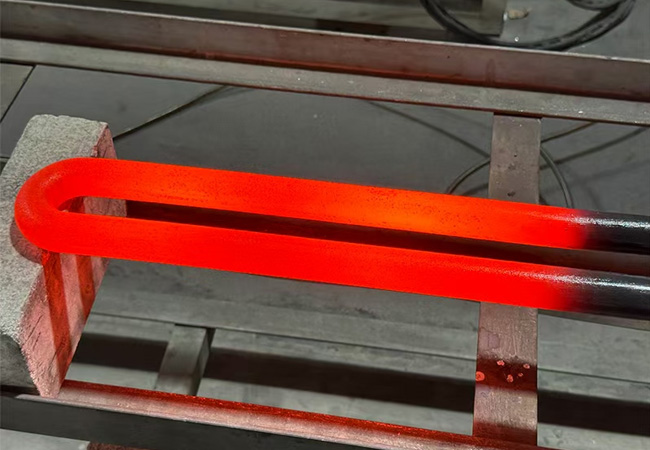
High-temperature resistance: Silicon carbide heating elements can operate for a long time under extreme high-temperature environments without deformation or failure, and are suitable for industrial scenarios requiring ultra-high-temperature heating.
Oxidation resistance: When heated in air, a dense layer of silicon dioxide (SiO₂) protective film is formed on the surface of silicon carbide, effectively preventing further internal oxidation and thus prolonging its service life.
High thermal efficiency: its excellent thermal conductivity makes the heat evenly distributed, high heating efficiency and relatively low energy consumption.
Chemical stability: Silicon carbide has strong resistance to acid, alkali and other corrosive substances, suitable for use in harsh chemical environments.
Long service life: Compared with metal heating elements, silicon carbide elements have a longer service life under proper maintenance, especially in high-temperature oxidizing atmosphere.
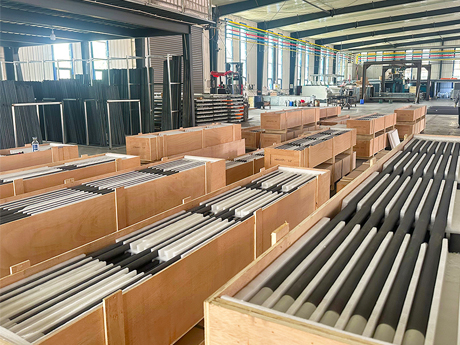
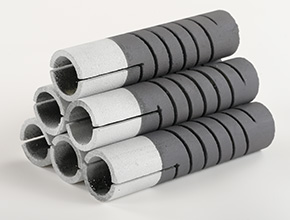
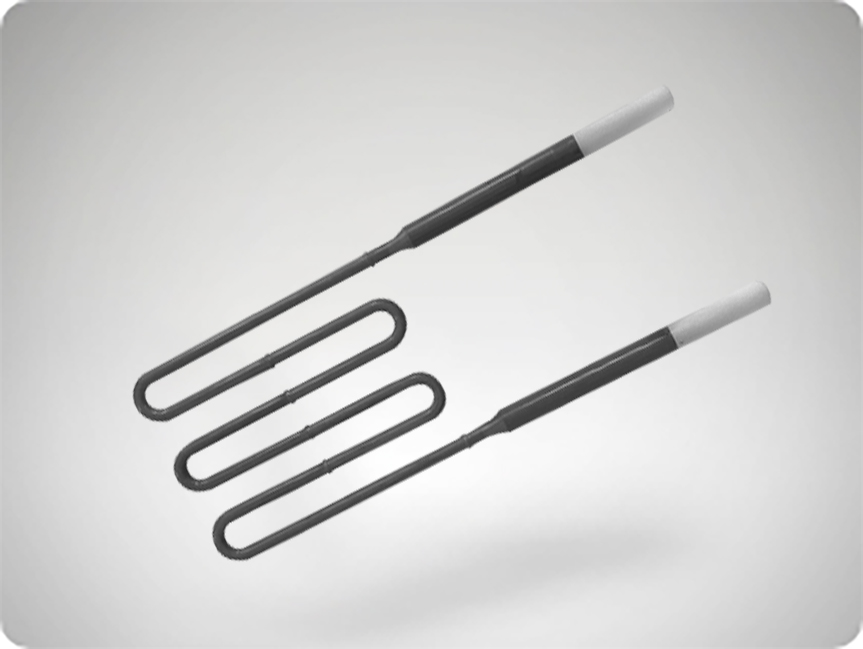
The manufacturing process for silicon carbide heating elements typically consists of three main steps: raw material preparation, molding and sintering. First, high-purity silicon carbide powder is mixed with small amounts of additives to adjust its resistivity and mechanical properties. Then, the mixture is molded into different structures such as rods, tubes or U-shapes by extrusion or molding processes. Finally, sintering is carried out in a high temperature sintering furnace to densify the material and obtain the desired physical properties. The finished product is usually divided into a hot section, which is responsible for generating high temperatures, and a cold end, which facilitates the connection to a power source.
Silicon carbide heating elements are used in a wide range of industries due to their excellent performance:
Industrial furnaces and kilns: such as ceramic sintering furnaces, glass melting furnaces and metal heat treatment furnaces, Silicon Carbide elements provide a stable high-temperature environment.
Laboratory equipment: In the field of scientific research, they are used in high-temperature experimental furnaces or analytical instruments to ensure precise temperature control.
Semiconductor manufacturing: In crystal growth and diffusion furnaces, silicon carbide components are favored for their high purity and high temperature resistance.
Chemical industry: in reaction equipment requiring corrosion and high temperature resistance, such as catalyst production.
Despite the excellent performance of silicon carbide heating elements, some precautions should be taken when using them. For example, prolonged use in reducing atmospheres (e.g., hydrogen) should be avoided to avoid damaging the surface protective film. In addition, make sure that the connection between the cold end and the heating section is secure during installation to avoid localized overheating due to poor contact.
Silicon carbide heating elements have become an indispensable part of modern industrial heating technology due to their high temperature resistance, oxidation resistance and high efficiency. With the continuous progress of material science and manufacturing process, the performance of this heating element will be further improved to provide reliable heating solutions for more fields. Whether in industrial production or scientific research, silicon carbide heating elements have shown their unique value and broad application prospects.

 English
  Español
  日本語
日本語  한국어
한국어  Русский